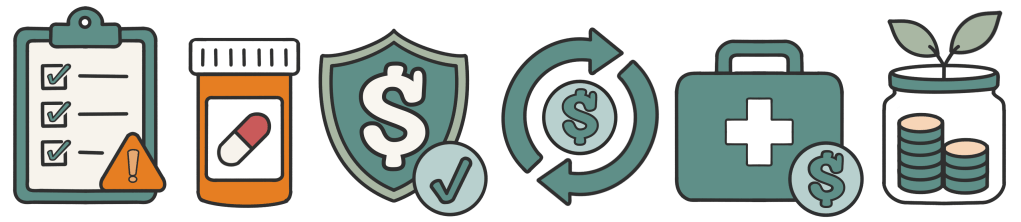
Financial life has a lot of moving parts, and most of them do not come with clear instructions. These categories are here to help you find the kind of financial side effect you are dealing with, whether it is student loan confusion, debt stress, emergency expenses, or planning for later without pretending everything is fine right now.
Think of this as the intake desk. Pick the symptom, then find the explanation that fits.
Symptoms
What’s going wrong, why it feels stressful, and how to recognize the warning signs.
This section is for financial problems that keep showing up but are hard to name. Growing balances, confusing loan notices, scam calls, credit card creep, payment anxiety, and that general “something is off but I can’t tell what” feeling.
Good place to start if: you know something feels wrong, but you are not sure what is causing it.
Prescriptions
Plain-English strategies, tools, and next steps for dealing with debt and repayment.
This section focuses on what you can actually do next. Repayment plans, debt payoff methods, student loan options, calculators, checklists, and practical ways to make the numbers less foggy.
Good place to start if: you want a plan, a worksheet, or a clearer way to compare your options.
Preventative Care
Small steps that help keep financial problems from turning into bigger ones.
This section is about building a little protection before the next surprise expense shows up wearing tap shoes. Emergency funds, budgeting habits, savings buffers, financial check-ins, and ways to avoid using credit cards as the default backup plan.
Good place to start if: you want to stop the same money problems from repeating.
Interactions
How different financial systems affect each other.
Some money problems are confusing because they do not happen in isolation. Student loans can affect taxes, school enrollment can affect repayment, forbearance can affect interest, and payment choices can affect long-term payoff. This section explains the “wait, why did that happen?” moments.
Good place to start if: one financial decision seems to be causing side effects somewhere else.
Acute Conditions
Urgent money situations that need attention sooner rather than later.
This section covers the financial equivalent of “okay, what do I do right now?” Missed payments, past-due accounts, sudden bills, collection worries, and moments where waiting too long can make things worse.
Good place to start if: something already happened and you need a next step, not a lecture.
Long-Term Care
Building a life while still dealing with debt.
This section is about the future: retirement, financial goals, stability, home and car decisions, debt fatigue, and figuring out how to move forward even when the debt is not gone yet. Because waiting to live until every balance hits zero is not always realistic.
Good place to start if: you are trying to balance debt payoff with real life.
Not sure where to start?
Start with Symptoms if you are trying to identify the problem.
Start with Prescriptions if you already know the problem and want a plan.
Start with Acute Conditions if something needs attention quickly.
Financial information should not feel like reading the side effects sheet for a medication you already took. Start where you are. Then follow the trail.
 Side Effects Include Debt