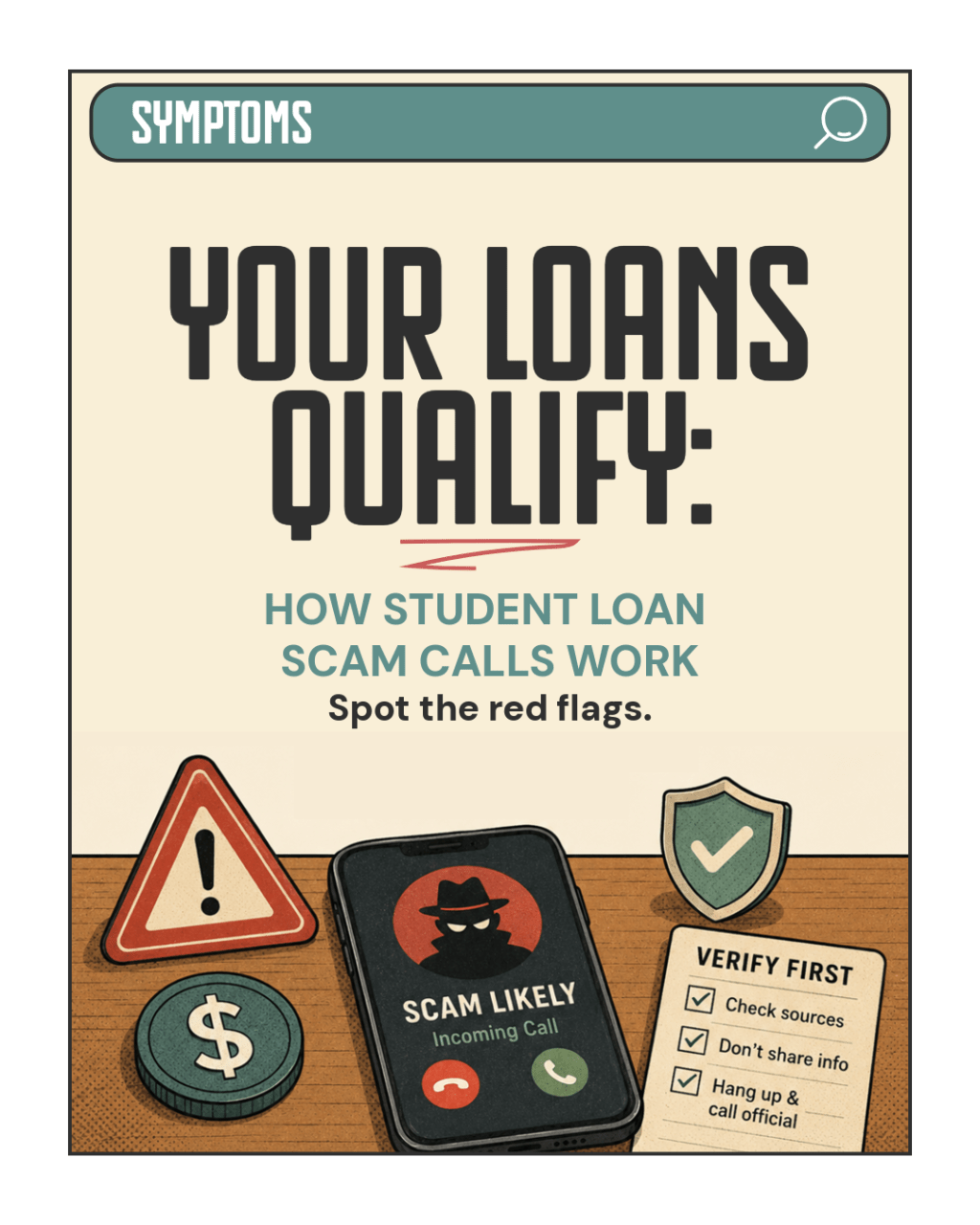
If you have student loans, there’s a decent chance you’ve received at least one mysterious phone call that sounds vaguely official.
“Good news. Your student loans may qualify for immediate forgiveness.”
Or:
“We’ve been trying to reach you about changes to your repayment eligibility.”
Or the classic:
“Your account has been flagged for urgent action.”
Which is interesting, considering they somehow do not know your actual loan balance, your servicer, your repayment plan, or sometimes even your name. Tiny detail. Barely suspicious.
Student loan scam calls tend to show up more when repayment rules change, forgiveness programs make headlines, payments restart, or borrowers feel confused about what they are supposed to do next.
That confusion is exactly what scammers rely on.
When people do not know what programs exist, whether they qualify, when payments restart, or who to trust, a fake “relief” call can sound just believable enough to cause panic.
Student loan scams work best when borrowers are already overwhelmed.
Symptom
“I keep getting calls saying my loans qualify for forgiveness or urgent relief.”
This can feel especially confusing when real repayment changes are also happening. Maybe your payment is restarting. Maybe your servicer sent you a notice. Maybe SAVE, RAP, IDR, recertification, and forbearance are all floating around in your brain like alphabet soup with consequences.
Then your phone rings.
Suddenly someone is claiming they can fix everything if you act immediately, pay a fee, or verify personal information. Conveniently, the solution is always urgent. Apparently student loan relief has the same energy as a mattress store liquidation sale.
Common side effects may include panic-answering unknown numbers, wondering if the government suddenly became aggressively proactive, hearing the phrase “limited-time program” suspiciously often, and developing emotional damage from robocalls at 8:12 AM.
Diagnosis
Student loan scam calls usually follow a pattern.
The caller creates urgency, sounds vaguely official, references forgiveness or repayment changes, pressures you to act quickly, and eventually asks for something valuable.
That might be money. It might be personal information. It might be your Federal Student Aid login credentials.
The script is often intentionally vague because the goal is not accuracy. The goal is to get stressed borrowers to react before they have time to think.
| Scam Tactic | What It Usually Means |
|---|---|
| “Act immediately” | They want you rushed and anxious. |
| “Your loans qualify” | They are using broad language that sounds personal but may not be. |
| “Final notice” | They are trying to create fear. |
| “Processing fee” | They may be charging for something you can do yourself. |
| “We need your login” | They may be trying to access your account. |
| Vague company name | They may be trying to sound government-adjacent. |
Some companies charge large “enrollment” or “processing” fees for programs borrowers could apply for directly. Others may try to access accounts entirely.
Either way, the pattern is the same: confusion goes in, money or information comes out.
Very efficient. Very gross.
Common Warning Signs
They Create Urgency
Scammers love pressure. They may say your eligibility expires today, the program is ending, this is your final notice, or you must respond immediately to avoid losing benefits.
Real student loan programs may have deadlines, but they generally do not need to emotionally tackle you over the phone.
Urgency is one of the easiest ways scammers get people to skip verification.
They Ask for Upfront Fees
A major warning sign is being asked to pay fees for forgiveness enrollment, consolidation processing, IDR applications, or repayment assistance.
That does not automatically mean every paid service is illegal, but it does mean you should slow down and verify what you are paying for. Many federal student loan actions can be done directly through official channels without paying a third-party company.
If the caller is acting like payment is required right now to “lock in” forgiveness, that is not a gentle red flag. That is a red flag with a tiny siren.
They Ask for Your FSA Login
This one matters.
Your Federal Student Aid login can give access to personal loan information, repayment applications, plan changes, and sensitive account details. Giving it to a random caller is basically the financial version of handing someone your house keys because they had a confident headset voice.
Do not casually give out your login, password, or authentication codes to someone who contacted you first.
They Use Vague Official-Sounding Names
Some scam callers use names that sound government-adjacent, education-related, or just official enough to slip past your suspicion.
They may use terms like processing center, document services, student advisory, federal support, loan assistance, or relief department.
That does not mean they are connected to the Department of Education, your loan servicer, or any actual federal program.
A name can sound official and still be about as official as a raccoon wearing a lanyard.
Why These Scams Work
Student loan systems are already complicated.
Most borrowers are trying to keep up with repayment plans, policy changes, interest accrual, servicer transfers, forgiveness rules, administrative pauses, and conflicting online information.
Add financial stress to that, and a phone call promising relief can start sounding believable.
Scammers understand that. They rely on fear, confusion, urgency, and the hope that maybe someone else finally understands the system better than you do.
That is what makes these calls so frustrating. They do not just target your money. They target the exact moment when you are tired of trying to figure everything out yourself.
What Real Student Loan Help Usually Looks Like
Legitimate student loan help is usually slower, less dramatic, and much less cinematic than scam calls make it sound.
Most real federal student loan actions happen through official channels like your servicer account, StudentAid.gov, written notices, account dashboards, and direct applications.
They do not usually involve repeated robocalls saying:
“Congratulations. You have been specially selected for forgiveness.”
Because federal bureaucracy rarely sounds that excited about anything.
| Real Help Usually Looks Like | Scam Help Often Looks Like |
|---|---|
| Written notices or account updates | Urgent phone calls from unknown numbers |
| Direct servicer or StudentAid.gov access | Third-party caller asking for login info |
| Clear application steps | Vague promises of fast forgiveness |
| Time to review options | Pressure to act immediately |
| No dramatic sales pitch | Fear-based scripts and “final notices” |
Treatment Plan
If you get a suspicious student loan call, the first step is simple: pause.
Do not give information just because the caller sounds official. Do not pay a fee because someone says your eligibility is about to disappear. Do not trust caller ID by itself.
Instead, verify the information independently.
| Do This | Why It Helps |
|---|---|
| Log directly into your servicer account | Confirms your actual loan status. |
| Check StudentAid.gov | Helps verify federal loan information. |
| Contact your servicer using the official number | Avoids calling back a scam number. |
| Research the company name | Helps identify complaints or suspicious patterns. |
| Hang up if pressure tactics start | Protects you from rushed decisions. |
And just as important:
| Do Not Do This | Why It’s Risky |
|---|---|
| Do not provide your FSA login | It can give someone access to your account. |
| Do not pay upfront “forgiveness” fees | You may be paying for free federal processes. |
| Do not rely only on caller ID | Numbers and names can be spoofed. |
| Do not make rushed decisions | Pressure is part of the tactic. |
A real option will still be real after you take time to verify it.
Things to Monitor
Scams are easier to spot when you know what your real student loan situation looks like.
If you have student loans, keep an eye on your account status, payment due date, repayment plan, servicer notices, forgiveness eligibility, and any official updates related to repayment changes.
You should also pay attention to repeated calls, emails, or texts using urgent language. If a company claims it can guarantee forgiveness, erase your loans immediately, or enroll you in a secret program, pause before responding.
| Monitor This | Why It Matters |
|---|---|
| Servicer account notices | Real updates should appear in your official account. |
| Payment restart dates | Scammers may use restart confusion as bait. |
| Repayment plan changes | Helps you know what actually applies to you. |
| Forgiveness program rules | Prevents falling for fake shortcuts. |
| Caller behavior | Urgency, fees, and login requests are warning signs. |
| Your own stress level | Panic makes bad information harder to question. |
One unfortunate side effect of scam culture is that borrowers start distrusting everything, including legitimate repayment updates. At this point, many people treat official student loan emails the same way they treat texts claiming their package could not be delivered.
Suspicious. Tired. Slightly offended.
And honestly, that caution makes sense.
Final Diagnosis
Student loan scam calls work because they target people who are already dealing with financial stress and systemic confusion.
The goal is not to become paranoid about every phone call.
The goal is to understand enough about your loans that urgency stops feeling automatically believable.
Because “your loans qualify” is not always the reassuring sentence it sounds like. Sometimes it is just bait with a headset.
Related Articles to Check Out
| Article | Why It Helps |
|---|---|
| SAVE vs. RAP Explained in Plain English | Helps you understand repayment changes scammers may reference vaguely. |
| Checklist Before Your Student Loan Payment Restarts | Gives you a practical way to verify your account before acting. |
| Navigating Payments: When Student Loans Don’t Decrease | Explains why balances may behave differently than expected. |
| What Is IDR and How Does It Actually Work? | Breaks down income-driven repayment without the policy fog machine. |
| What Happens If You Miss a Student Loan Payment? | Helps you understand real consequences so scammers cannot exaggerate them. |
 Side Effects Include Debt
Leave a comment