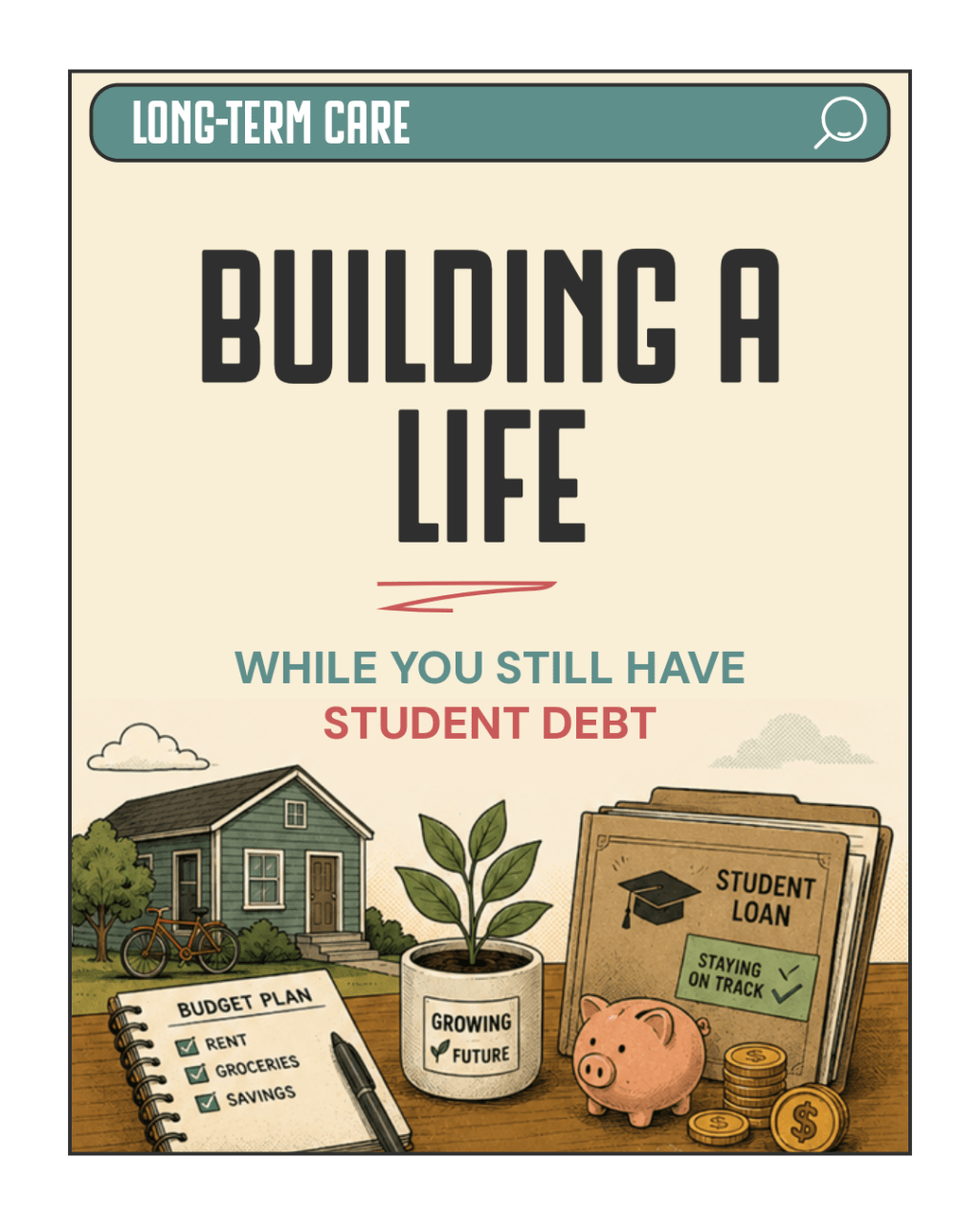
A lot of financial advice quietly assumes your student loans are a short detour.
A temporary inconvenience. A thing you aggressively tackle for two years before emerging debt-free into a sunlit meadow where everyone somehow owns a house, meal preps in matching glass containers, and has never once panic-checked their bank account in a grocery store parking lot.
For many people, that is not reality.
Student loans can stay around for years or even decades, which means eventually you run into an uncomfortable question:
How do you keep living your life while the debt is still there?
Because if your repayment timeline is long, you cannot treat your actual life like it only starts after the final payment clears.
Paying off debt matters. But so does building a life you can actually live while you are paying it.
Symptom
“My life feels like it is on hold until my student loans are gone.”
This can show up in a lot of ways. You may feel guilty every time you spend money on something enjoyable. You may feel behind compared to everyone else. You may delay goals because you think you are not “allowed” to move forward until the balance hits zero.
Sometimes the stress is not even the monthly payment itself.
It is the constant background awareness of the debt. Like a browser tab that never fully closes. It is just sitting there, humming quietly, draining the battery.
Common side effects may include feeling like every financial decision is wrong, comparing yourself to people online, avoiding your loan account entirely, or obsessively checking your balance while pretending you are “just reviewing things.”
Very casual. Very relaxed. Definitely not stress in a trench coat.
Diagnosis
Long-term student debt affects more than your monthly budget.
It can shape career choices, housing decisions, relationships, savings habits, confidence, and how you think about the future. Student loans often arrive during the same years people are trying to build adult lives, which makes the timing especially annoying.
You may be trying to repay loans while also dealing with rent, groceries, transportation, medical costs, family responsibilities, and the cost of simply existing in a world where one small bag of groceries now somehow requires a strategy meeting.
| Area of Life | How Student Debt Can Affect It |
|---|---|
| Housing | May delay moving, buying, or feeling stable. |
| Career choices | May influence job changes, salary decisions, or public service work. |
| Relationships | Can affect shared goals, marriage planning, or household budgeting. |
| Mental health | Debt stress can create anxiety, avoidance, or burnout. |
| Savings | Monthly payments may compete with emergency funds or retirement. |
| Confidence | Large balances can make progress feel impossible. |
The issue is not just the debt.
It is trying to make long-term life decisions while a large balance sits in the background acting like an unpaid emotional intern.
Treatment Plan
Stop Treating Your Life Like It Starts “After”
This is one of the hardest mental shifts.
If your repayment timeline is 10, 15, or 20 years, waiting until the debt is completely gone before allowing yourself to live is not realistic. That does not mean ignoring the loans. It means learning how to exist alongside them without letting them absorb your entire identity.
There is a difference between being responsible and putting your life in storage.
You can take student debt seriously while still building routines, relationships, hobbies, savings, career goals, and small moments of enjoyment.
Debt can be part of your financial reality without becoming your entire personality.
Build Financial Stability in Layers
You do not have to fix everything at once.
A lot of financial advice makes progress sound like a dramatic before-and-after transformation. In reality, most financial improvement happens quietly. No theme music. No confetti. Just small choices repeated long enough to become boring in a useful way.
Think in layers:
| Stability Layer | What It Can Look Like |
|---|---|
| Basic awareness | Knowing your balances, payment amounts, and due dates. |
| Emergency buffer | Building even a small savings cushion. |
| Consistent payments | Making required payments when possible. |
| High-interest debt focus | Prioritizing credit cards or other expensive debt. |
| Future planning | Saving for retirement, housing, or long-term goals in small amounts. |
| Life balance | Allowing some room for normal living. |
You do not have to be perfect to be making progress.
Sometimes the next right step is not doubling your payment. Sometimes it is building a $500 emergency fund, setting up autopay, or finally figuring out what repayment plan you are actually on.
Tiny glamour. Real impact.
Allow Some Room for Enjoyment
Constant deprivation usually backfires.
If your budget only contains stress, rice, spreadsheets, and existential dread, eventually your brain is going to stage a tiny financial rebellion. That is when people swing from extreme restriction to completely ignoring the plan.
Sustainable financial habits usually leave at least a little room for living.
That could mean a small fun money category, an occasional dinner out, a short trip planned responsibly, or one purchase that makes life feel less like a punishment.
This is not about pretending the debt does not exist. It is about building a plan you can maintain without emotionally detonating halfway through.
A budget with no breathing room is often a budget waiting to break.
Reevaluate the Goal
Not every borrower has the same best strategy.
For some people, the goal is aggressive payoff. They want the debt gone as quickly as possible, and they have the income and stability to push hard.
For others, the goal is manageable payments while building stability elsewhere. That may mean staying on an income-driven repayment plan, pursuing forgiveness, building savings, paying off higher-interest debt first, or making slow but steady progress.
Neither path is automatically better.
| If Your Main Goal Is… | Your Strategy Might Focus On… |
|---|---|
| Fast payoff | Extra principal payments and lower total interest. |
| Lower monthly strain | Income-driven repayment or budgeting adjustments. |
| Forgiveness | PSLF, IDR forgiveness, or qualifying repayment tracking. |
| Stability | Emergency savings and predictable monthly payments. |
| Reducing stress | Automation, simplified tracking, and fewer decision points. |
| Whole-life progress | Balancing debt payoff with savings and personal goals. |
The best repayment plan is usually the one you can realistically maintain without turning your entire life into a debt-themed endurance sport.
Things to Monitor
Long-term student debt is not something you have to think about every minute, but it does need occasional checkups.
Watch for repayment burnout, avoidance habits, growing balances from unpaid interest, scam companies promising miracle solutions, lifestyle inflation when income increases, and mental health strain connected to debt stress.
Also monitor how often you compare yourself to other people online.
Social media has a way of making everyone else appear debt-free, emotionally stable, internationally traveled, and somehow renovating kitchens at age 27. Meanwhile, many people are privately juggling bills, debt, uncertainty, and panic-searching “what happens if I miss my student loan payment” at 12:43 AM.
| Monitor This | Why It Matters |
|---|---|
| Repayment burnout | Exhaustion can lead to avoidance or missed decisions. |
| Balance changes | Helps you understand interest and payment impact. |
| Emergency savings | Protects you from adding more debt. |
| High-interest debt | Credit cards may need priority over student loans. |
| Forgiveness eligibility | Your strategy may change if forgiveness is realistic. |
| Lifestyle inflation | Higher income can disappear quickly without a plan. |
| Mental health strain | Debt stress can become heavier than the payment itself. |
| Comparison habits | Other people’s highlight reels are not your financial plan. |
You do not need to obsess over every dollar daily. But you do need enough awareness to make decisions from reality instead of fear.
Final Diagnosis
Having student debt does not mean you failed financially.
For many borrowers, repayment is not a short-term obstacle. It is a long-term financial condition that has to be managed alongside work, relationships, housing costs, savings, emergencies, and everyday life.
The goal is not perfection.
The goal is building a life that still functions while the debt exists, instead of waiting for permission to start living after the balance reaches zero.
Student loans may be part of the picture, but they are not the whole portrait.
Related Articles to Check Out
| Article | Why It Helps |
|---|---|
| Navigating Payments: When Student Loans Don’t Decrease | Explains why payments do not always make balances shrink quickly. |
| How to Build an Emergency Fund While You’re Still in Debt | Helps you create stability while still managing repayment. |
| Debt Snowball vs. Debt Avalanche: Which Payoff Method Actually Works Better? | Useful if you are deciding how to prioritize different debts. |
| SAVE vs. RAP Explained in Plain English | Helps you understand repayment plan changes and options. |
| Checklist Before Your Student Loan Payment Restarts | Gives you a practical pre-payment checkup before repayment begins again. |

 Side Effects Include Debt
Leave a comment